
Return to Office: UK Workers Surveyed About RTO Mandates

A close-up view of the bottom halves of three smartly dressed colleagues walking across the white lines of a pedestrian street cross-walk to go to work in the morning. The two men on the right carry soft leather briefcases and wear long black coats, and the woman on the left has a large shoulder bag and wears a long grey coat. The woman on the left and the man on the far right of the three have lanyards with their work IDs visible hanging down from their necks, and the rear of a yellow car is visible parked on the side of the street behind the woman and to the left. Image at LondonOfficeSpace.com.

Survey Summary: UK Office Workers’ Perspectives on Returning to the Office

Five years after the onset of the pandemic that transformed the world of work, the dynamics of office life are still getting readjusted. According to a 2024 survey, more than 80% of British chief executives foresee a full return to the office within 3 years – but how do employees view this? 

To find out, we polled 400 office workers of private and public sector employers on this hot topic and asked about their preferences and concerns as they transition from remote work back to the office. Here are the key findings.

Who’s Actually Back in the Office?

Our UK survey reveals that a majority of respondents (57%) have returned to the office on a part-time or hybrid working basis at their employer’s request, while 43% are back full-time. These figures confirm that in-person office work has taken over remote work as the new normal, although there’s a substantial shift towards flexible models. 

Continue reading “Return to Office: UK Workers Surveyed About RTO Mandates”

Office Christmas Party Ideas: Not the Traditional, Boozy ‘Do

A woman in a warm knitted top looking toward a tall and wide Christmas tree in the middle of a city square at night. The tree is covered with white fairy lights, and gold and red baubles are scattered around the branches. Groups of people mill about between the woman and the tree. Image at LondonOfficeSpace.com.

Cringe-worthy karaoke and awkward situations – this seems to be the main theme of the average Christmas party in many offices. Unsurprisingly, a 2021 survey found that 1 in 10 Brits would rather avoid attending Christmas party activities because they didn’t want to embarrass themselves, and in many cases, alcohol is to blame. 

But something is changing: UK businesses are moving away from the traditional office Christmas party and replacing boozy ‘dos with more inclusive celebrations. For this article, we surveyed 70 companies to find out how they’re innovating and switching from office parties with a booze-fuelled format to something genuinely enjoyable for everybody. 

Let’s take a look at the findings of this survey – you might find some interesting ideas on how to plan this year’s Christmas party.

The shift towards more inclusive holiday celebrations

The main issue with celebrations that centre around alcohol is that some employees feel left out. Gen Z, which will soon account for 30% of the workforce, are known for consuming less alcohol than Millennials, and many don’t drink at all. Also, with London being such a diverse city, it’s very likely that almost every office will have someone from a different cultural background. 

This is why many businesses now opt for alcohol-free gatherings during the festive period. As some of our respondents said when asked about their alternative Christmas event ideas, there’s no need to force outdated traditions. And when events align with employees’ values, engagement naturally follows. At the end of the day, people choose what speaks to them. So, read on to learn about some of the more inclusive and non-traditional work Christmas party ideas that are gaining traction in workplaces across industries.

Continue reading “Office Christmas Party Ideas: Not the Traditional, Boozy ‘Do”

Gen Z in the Workplace: A Comprehensive Guide

A team of six Generation Z employees in smart casual attire sit around a large wooden desk having a meeting. Some of them have their laptops in front of them, and others have note-taking implements. The room they are in is well-lit with natural light, and many pot plants adorn shelves along the whitewashed walls. Image at LondonOfficeSpace.com.

Generation Z has begun to populate the world’s workplaces, and business leaders must adapt to meet their unique needs and expectations. This guide aims to provide you with a comprehensive understanding of how to attract, retain, and inspire Gen Z workers in your organisation.

As the workforce continues to evolve, so too must the strategies of those who lead it. With Gen Zers—the cohort born between 1997 and 2012—starting to truly take their place in the professional world, it’s time to rethink traditional workplace norms. This generation is unlike any before it, and understanding their motivations is crucial for business leaders who wish to build a dynamic and forward-thinking company.

Understanding the New Generation

Generation Z is entering the workforce with a unique set of values shaped by their experiences. Unlike their millennial predecessors, who often emphasised a good work-life balance and job stability as must-haves, Gen Z brings a fresh perspective driven by digital fluency, social consciousness, and a desire for meaningful work. There are approximately 12.7 million Gen Z individuals living in the UK, making up around 19% of the population, and this generation is already making a significant impact on the workplace. As of 2022, there were 4.3 million Gen Zers in employment, making them the third-largest generation in the UK’s labour force.

Continue reading “Gen Z in the Workplace: A Comprehensive Guide”

The Benefits of Having Plants in the Office

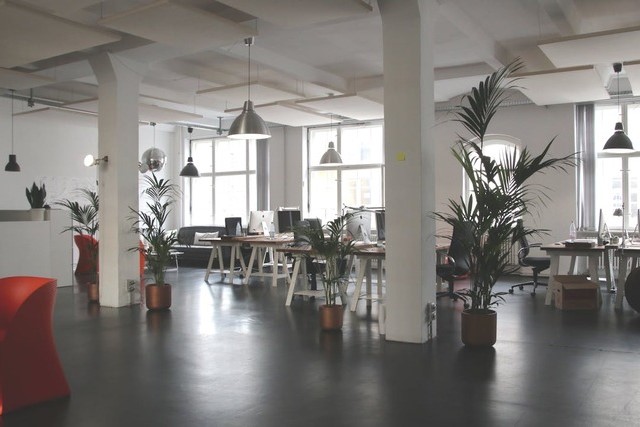
A daytime view across the inside of a modern, open-plan office space with a polished concrete floor, chrome pendant lights hanging from the ceiling and floor-to-ceiling windows letting in muted sunlight, probably from an overcast sky. Indoor plants are arranged artfully in round bronze-coloured pots next to the rectangular white columns that rise to the ceiling in the middle of the workspace, and workstations are arranged next to the windows. Image at LondonOfficeSpace.com.

In recent years, there has been a significant shift towards prioritising well-being in the workplace. As time goes by, businesses have a better understanding of how the environment impacts employee health and productivity. In a 2021 survey, nearly 70% of executives rated well-being as a top priority for their organisation.

As a result, many companies are increasingly focusing on their office workers’ quality of life, creating office spaces that support both physical and mental well-being. One of the most popular and effective ways to increase productivity and improve different measures of workplace satisfaction is by incorporating plants in the office, as we will see in this article.

The Physical Benefits of Indoor Office Plants

Plants absorb carbon dioxide and release oxygen, creating an oxygen-rich environment and improved air quality. Previously conducted laboratory studies by NASA have shown that plants can filter out volatile organic compounds and other harmful toxins present in plastics, inks, cleaning products, and some types of insulation.

Indoor plants can also regulate humidity levels. According to the HSE, low humidity is one of the causes behind sick building syndrome. Offices often suffer from dry air due to temperature control, heating and air conditioning systems and layouts that interfere with airflow. Plants draw water from the roots to their leaves, releasing moisture into the air and helping maintain optimal humidity levels. 

Continue reading “The Benefits of Having Plants in the Office”

Cycling to Work in London: Bike-Friendly Office Locations

An office worker wearing warm, dark clothes, a grey backpack, and a black helmet rides a white road bike along the side of the road past a London bus stop shelter and a glass-fronted shopfront. Image at LondonOfficeSpace.com.

Cycling to work has become increasingly popular in London. We haven’t got to the point of cycle superhighways, yet, but the number of daily bike trips has been growing since 2021, and there are plans to extend the cycle lane network so that by 2030, 40% of Londoners will live within 400m of a cycleway.

To accommodate this growing trend, many offices are becoming more bike-friendly by providing various amenities for cyclists.  In this article, we’ll explore what makes an office bike-friendly and highlight some of the best bike-friendly office locations in London.

What Makes a Bike-Friendly Office?

Regular exercise is good for mental health and physical health. And by deciding to cycle commute to work, you’re also contributing to reducing air pollution. A bike-friendly office supports and encourages cycling through various features and amenities, such as:

  • Secure bike storage: Offices should provide safe, secure, and easily accessible bike storage areas to ensure cyclists can park their bikes and cycling equipment with peace of mind.
  • Showers and changing facilities: To accommodate employees who cycle to work, offices should offer clean and well-maintained showers and changing rooms. Or at least spacious enough bathrooms to change into work clothes.
  • Repairs stations: Having on-site or nearby bike repair stations equipped with essential tools can be a significant convenience for cyclists.
  • Cycle to Work scheme: Offices that participate in the Cycle to Work scheme offer financial incentives for employees to purchase bikes and cycling gear.
  • Bike maintenance workshops: Regularly scheduled bicycle maintenance workshops help employees keep their bikes in top condition and promote a cycling culture at work to increase uptake among those yet convinced.
  • Bike-friendly routes: Offices located near dedicated cycling lanes or routes encourage more employees to cycle to work. In London, there are approximately 223 miles of marked cycle ways.

Continue reading “Cycling to Work in London: Bike-Friendly Office Locations”

5 Expert Tips on the Best Way to Find Commercial Office Space to Rent in London

A late afternoon view of St Paul's Cathedral between the glass sides of two buildings. Image at LondonOfficeSpace.com.

Finding the right commercial office space in the UK’s bustling cities, especially in London, is not just about square footage or the number of rooms; it’s about discovering a place where ambitions meet opportunity, where businesses can thrive and flourish. The right office spaces can inspire creativity, improve productivity, and make a lasting impression on clients and partners. In contrast, a poorly chosen space can lead to inefficiencies, decreased morale, and even lost opportunities.

We understand that the journey to finding the right commercial space can seem daunting, especially with the vast amount of options in London. However, with the right approach and guidance, this process can be streamlined and even enjoyable. As part of our commitment to support businesses in their growth journey, we’ve crafted this guide to simplify the process. Our promise to you is straightforward: by the end of this post, you’ll have a clear, step-by-step roadmap to navigate the London commercial real estate market with confidence.

Continue reading “5 Expert Tips on the Best Way to Find Commercial Office Space to Rent in London”

Mastering the Art of the Office Seating Plan

A view across a modern, well-lit, and high-ceilinged workspace. There is exposed, shiny ducting criss-crossing the ceiling as well as bright, straight light fixtures hanging down. People work at desks on the left, there's breakout space on the right next to tall windows, and there's a private office and meeting room behind glass on the far wall. Image at LondonOfficeSpace.com.

In the dynamic world of modern business, the design and layout of office spaces play pivotal roles in defining a company’s success. One often overlooked aspect of this is the office seating plan. While it might seem like a simple task, deciding where your employees sit can directly influence your business outcomes.

Why is that? Well, at its core, an effective seating plan does more than just arrange desks and chairs. It sets the stage for enhanced collaboration, fosters a conducive environment for focused work, and can even act as a catalyst for spontaneous innovation.

Office spaces, particularly in bustling business hubs like London, aren’t merely physical areas filled with furniture. They are strategic assets. How you utilise these assets—like creating a well-thought-out seating arrangement—directly correlates with employee productivity. For instance, the concept of hot-desking, which is rapidly gaining traction in the UK, underscores the need for flexibility and efficiency in office seating. With employees no longer tied to one specific desk, the need for a coherent and adaptive seating strategy becomes even more essential.

Continue reading “Mastering the Art of the Office Seating Plan”

Prime Locations for Office Space, Central London

A dusk view of St Paul’s Cathedral from the middle of Millennium Bridge. Image at LondonOfficeSpace.com.

Selecting an office space in a prime Central London location is a strategic choice that can add value to a company’s image. In addition to offering practical benefits like easy access and enhanced networking, office space in a prime Central London location fosters credibility and demonstrates commitment to high professional standards.

In this article, we take a look at some of the most sought-after office locations in Central London and explore the unique features that make these locations stand out.

Continue reading “Prime Locations for Office Space, Central London”

Shining a Light on How Office Lighting Fuels Employee Creativity

lights in an office space

The contemporary workspace is not merely a place where tasks are executed; it is an environment where creativity flourishes, ideas merge, and productivity thrives. The importance of the office environment in fostering productivity is an intricate web of factors, many of which are often overlooked. Among them, the role of lighting and office lights stands towards the top. The right lighting doesn’t just illuminate a room; it sets the tone, mood, and energy of a workspace. A well-lit office can boost morale, reduce fatigue, and significantly enhance efficiency. It’s not merely a matter of aesthetics, but a critical aspect affecting the wellbeing and productivity of employees.

Understanding the role of lighting in the workplace goes beyond the selection of bulbs and fixtures. It’s about creating a harmonious working space, where light complements the work, whether in a bustling coworking environment or a serene private suite. In the UK, where the blend of tradition and modernity often reflects in architectural designs, the challenge and opportunity lie in integrating lighting solutions that enhance rather than impede the workflow. This post aims to explore the best office lighting strategies for employee productivity, considering the unique characteristics of various office solutions provided by London Office Space, and aligning them with the specific regulations and trends within the UK market. It’s a journey towards creating a brighter, more productive future for your office space.

Continue reading “Shining a Light on How Office Lighting Fuels Employee Creativity”

Hot Desking & Renting a Virtual Office in London

Hot desking and virtual office in London example co-workspace with business women working on PCs and laptops at separate workstations image at LondonOfficeSpace.com.

What is Hot Desking?

Hot desking is a relatively new form of office space allocation that maximizes the available space by allowing multiple users to use one workstation. Since workstations were only used during a fraction of the working day, hot desking emerged to allow employers to maximise the amount of space available.

Hot desking is preferred by organizations known for their flexible working cultures, and it is a cost-effective option for businesses in areas such as Central London where high commercial real estate prices are the norm. In business centres, hot desks can be rented for different periods, ranging from an hour to a month or longer.

Hot desking fosters a corporate culture of sharing and collaboration, making it easier to exchange ideas and brainstorm with staff from different departments and areas of expertise. Renting a hot desk in London for a day, week, month, or however long is required, encourages creativity and allows for access to top flight amenities such as professional meeting room hire and community networking events.

Continue reading “Hot Desking & Renting a Virtual Office in London”