
Uncomfortable situations ignored by most workers

We all have received positive feedback from our colleagues about the change of our hairstyle or a nice pair of trendy shoes. But what about the embarrassing feedback, especially if both sides feel uncomfortable thinking about, let alone mentioning it?

CareerBuilder has carried out an interesting survey recently, trying to establish how brave office workers are at revealing unpleasant information, i.e. that someone has some food stuck in their teeth or that the colleague’s zipper is undone.

It turns out that we are more likely to comment on embarrassing situations if they involve people of the same or lower work level. For instance, half of office workers would inform the same level colleague if there was something in their nose, whilst only a third would be brave enough to tell a higher level colleague.

Only 11 per cent of respondents would ever tell a higher level co-worker that they needed a shower, the same percentage would comment on the inappropriate wardrobe, and only 13 per cent would tell their superior that their hair was a mess.

The survey involved 4,478 full time working respondents in the USA.

Additional advice for office workers in London including Healthy Office Lunch Delivery Services in London, Business Etiquette, Office Kitchen Etiquette, Making a Good Impression on Your First Day in the Office, A Guide to Managing Stress in the Workplace and advice on Working Remotely.

Managing a vacant property

abandoned.jpg

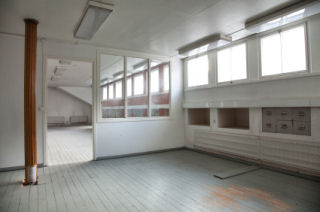
What happens to a vacant property after the last tenants moved out and there are no signs of new occupants moving in? Managing vacant property may prove much tougher than it seems.

A recent survey carried out by SitexOrbis shows that the top three most important issues whilst managing vacant property are security, loss of rental income and empty property tax. Other key concerns included maintenance and compliance with insurance stipulations.

The recession has resulted in increased numbers of vacant commercial properties. The amount of available office accommodation in the city of London has gone up by 90 per cent between mid 2008 and mid 2009. Company and retail closures across Britain have repeated the same pattern in most major cities.

Many commercial property owners report a rise in squatting, vandalism, arson and break-ins; insurers are reporting an increase in large-scale fires. More than 50 per cent of landlords are unsure about the health and safety regulations for vacant properties.

The other concern is keeping properties in a fit condition for viewing and attracting new tenants. Landlords have to invest in protection solutions such as wireless alarms and other electronic security measures in order to tackle problems of squatters, criminal damage, arson and graffiti. Continue reading “Managing a vacant property”

Londoners spend less on eating out

The cost of enjoying a meal at the capital’s restaurants has fallen down for the first time since 1997, a survey of London restaurants shows. Money saving techniques adapted by the Brits in the wake of the credit crunch mean there is less money left to splash out on meals outside of home.

According to the 2010 Zagat London Restaurants Survey, the average cost of a meal fell by 0.4 % to £40.39 in 2009. The cost had been rising at an annualised rate of 3.6 % since 1997.

The survey was carried out at 1100 London’s restaurants, with over five thousand diners revealing they now eat out approximately 2.2 times a week, whilst in 2008 they opted for a meal out nearly 2.5 times a week.

Nearly 50% of diners admitted this was a direct effect of the recession. Even though people are more careful with their money, eating out remains a vital part of London lifestyle.