Do Employees Feel Supported by Their Managers After the Pandemic? (2022 Poll)

Following on from our recent articles exploring the ways in which UK office workers feel about their return to the workplace after the COVID-19 pandemic, we once again polled 450 individuals to determine how employees feel about the managers and bosses orchestrating a shift back into the office.

The questions presented by this poll asked respondents to give a general indication of how supported they’ve felt by management since returning to the workplace and outline whether they currently feel positive, negative, or neutral about their employer.

To summarise

  • 29.3% of UK office workers feel more supported by management since returning to the workplace
  • On the other hand, 18.4% of respondents fell less supported
  • 44.4% of UK office workers indicated that managerial support felt the same in a post-pandemic working environment
  • The remaining 7.8% of respondents stated that they haven’t returned to the workplace

Continue reading “Do Employees Feel Supported by Their Managers After the Pandemic? (2022 Poll)”

City of London Office Space Rental Costs & Vacancy Rates 2021

2021 started off with gloomy forecasts for the London commercial property market. According to market analysts, the outlook for the first half of the year was to be dominated by soaring vacancy rates, which were expected to reach a 10-year-high.

In Central London, changes to vacancy and supply rates have certainly been a constant for the past few quarters. In this part of the city, increasing vacancy rates have been mainly driven by the release of large amounts of secondary and Grade B space.

Earlier in the year, vacancy rates in the City were slightly over 10%, but supply was still rising, so they were expected to continue increasing. However, the second quarter arrived with a decline in vacancies, which ended up averaging 8.7% across the City. Despite the improvement, at more than 6.5 million square feet, these are the highest availability rates since mid-2012.

The second quarter of the year also brought some improvement in office take up rates. While these are still significantly below the ten-year average, there was a quarterly increase of over 20% across central London.

However, demand remains rather weak and take up for Central London offices is largely down when compared to 2020 figures. Although demand is weaker, it is still there with an increased focus on quality office space, whether it is new, refitted, or retrofitted to a high standard. The majority of demand so far has come from the public sector, professional services, insurance, and financial services companies.

Continue reading “City of London Office Space Rental Costs & Vacancy Rates 2021”

Innovative Meeting Spaces in London.

London tops the list of the 25 best meeting destinations in Europe, hosting hundreds of conferences, congresses, and professional events every year. The city’s venues cater to every industry sector and accommodate meetings of all sizes, from meeting rooms for small gatherings to large venues capable of accommodating thousands of delegates. Among all this choice, we highlight some of the most innovative and unique meeting spaces in London.
1. Plexal

Plexal is an innovation centre and workspace built in 2017 to provide space for the development of cutting-edge ideas. The building is often chosen for hackathon’s, tech events, and meetups for the creative and tech sectors. Meeting space is suitable for events of up to 300 people, and stands out for the quality of its dedicated event technology. Cutting edge equipment like 3D printers come as a standard, as do large projection screens and monitors and bespoke lighting.

Another way in which Plexal stands out from other meeting venues is its indoor park. This unique space has been specifically created to host informal events, but can also double as a breakout area. Sitting is arranged in bleachers, loungers, deck chairs, even bean bags.

Continue reading “Innovative Meeting Spaces in London.”

Overview of the London Commercial Property Market in 2016

During the last quarter of 2016, and much in line with the rest of the year, a cautious approach has been the predominant theme in London’s commercial property market. Broadly speaking, the market saw a consolidation of the trends that were evidenced earlier in the year, namely weak occupier demand (particularly in the office sector), moderate rental growth levels, and a surge in the number of occupiers looking for flexible lease terms.

Office Market

Political uncertainty and fluctuations in the value of the pound caused a slow-down of the office market during Q4. However, while take-up rates were down when compared to the long-term average, they noticeably picked up towards the end of the year. With regards to the causes behind this slow-down, market analysts at Green Street Advisors have drawn attention to factors other than the current political climate. For instance, the implementation of advanced technologies and automation is expected to have far-reaching effects in industry fields that are considered major office occupiers, ranging from finance to customer service.

The main office market indicators behind end-of-year data showed that Grade A absorption and take-up rates were down when compared to the city’s 10-year average. At the same time, availability rates for office properties across the city increased, and rental values remained stable. Market indicators for West End office units followed this pattern with the exception of rental rates, which evidence a slight decrease of 5.2 per cent, mainly in Marylebone, Knightsbridge, and Bloomsbury. In other parts of the West End, rental values remained stable thanks to a combination of flexible incentive packages and low vacancy rates. The highest rental rates were in Mayfair and St James’ (£118 / sq ft), whereas the lowest were in Paddington and Bloomsbury (£67.50 and £68.50 respectively). Vacancy rates were at their highest in St James’ (close to 10 per cent), Paddington and Bloomsbury (6 per cent). Key occupiers were business services, media, tech, and finance. Continue reading “Overview of the London Commercial Property Market in 2016”

City in the East – London Plan

In October 2015, the mayor of London unveiled his office’s development plan for several neighbourhoods in East London and to the south of the River Thames. This initiative is part of the London Plan, an ambitious project that was initially presented to the general public in 2004. The main objective behind the new City in the East plan is to promote the socio-economic development of designated Opportunity Areas within the British capital.

Below is a detailed description of the plan and the benefits that it will bring to local residents once completed.

City in the East: An Overview

The City in the East Plan is a collaborative project that will bring together the Greater London Authority, local borough councils, Transport for London, and a number of stakeholders from both the public and private sectors. The plan aims to consolidate and build on previous urban development projects, such as Thames Gateway.

City in the East will focus on the creation of employment and on the development of quality housing by capitalising on the large amounts of brownfield land available in this part of the city, and by transforming it into mixed-use developments. Overall, it is expected that the implementation of this plan will benefit approximately 600,000 Londoners and will result in the creation of 280,000 jobs and 200,000 homes. At the same time, the City in the East plan will help prepare the UK’s capital city infrastructure for future demographic growth, as it is expected that London’s population will increase by nearly 2.5 million by 2050.

Opportunity Areas and Housing Zones

The City in the East plan will affect a total of 27 Opportunity Areas and Housing Zones.

The largest area is Olympic Legacy, where 32,000 new housing units and 50,000 jobs are to be created. This Opportunity Area covers Olympic Park, the northern and southern Olympic Fringes, Hackney Wick, Fish Island, and Stratford. Approximately 1.3 million square metres of commercial space will also be built in this Opportunity Area. Continue reading “City in the East – London Plan”

City in the West – London Plan

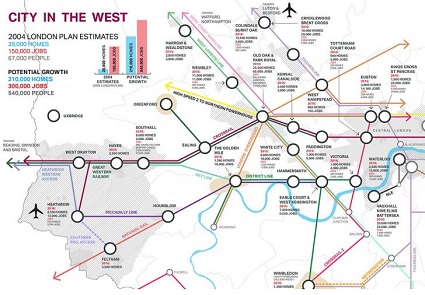
In the autumn of 2015, the former mayor of London Boris Johnson announced an ambitious urban development plan for the British capital. The project (which in fact consists of two different but interrelated plans known as City in the East and City in the West) aims to create a more balanced distribution of economic and commercial power within the UK’s capital city.

Over the past decade, development plans in West London have been somehow overlooked, since most of the work has been directed at transforming East London and getting this area ready for the Olympics. The City in the West Plan was created to address this situation and to help tap into the potential of West London and turn it into one of the most desirable places to live and work.

City in the West: Overview and Key Figures

City in the West is a joint initiative supported by the Greater London Authority, Transport for London, local councils in west and south west London, and various public and private sector investors. One of the key objectives of the City in the West plan is to consolidate a number of local planning and development projects, such as the Western Wedge or the Western Access Corridor. Other important objectives include the delivery of substantial infrastructure improvements, the creation of jobs, and the construction of quality and affordable housing.

This plan could be considered as an ambitious extension of the London Plan. Whereas the 2004 London Plan contemplated the creation of 150,000 jobs in West London, the new plan sets its estimates at 300,000 jobs. Housing creation estimates have also been re-evaluated, going from 30,000 homes according to the 2004 plan to approximately 210,000. All in all, the Greater London Authority expects that more than 600,000 Londoners will directly or indirectly benefit from the new developments brought about by this plan.

Locations and Scope

The City in the West plan will be implemented across several Opportunity and Intensification Areas. Housing Zones have also been designated in boroughs located to the west and south west of central London. Key locations include: Continue reading “City in the West – London Plan”

The Business Benefits and Economic Boost : Crossrail Eastern Section

Crossrail will provide a broad range of economic benefits to London, as well as other areas of the South-East of England and across the United Kingdom. The estimated benefit of project to theeconomy will be at least £42 billion, according to Crossrail. The new transport corridor will also spur new business development, employment opportunities, and improved commuting times.

The Eastern section of Crossrail will stretch from Stratford in East London to Shenfield in Essex. As part of the project, a number of rail stations will see improvements to provide better transport gateways. Improvements to stations will also help promote development and regeneration in the neighbouring area, particularly within a kilometre of the station. Improvements along the 25-kilometre, 15.5-mile route are planned for Brentwood, Chadwell Heath, Forest Gate, Gidea Park, Goodmayes, Harold Wood, Ilford, Romford, and Shenfield stations. Other stations along the eastern section of the Crossrail route include Manor Park, Maryland, and Seven Kings. Continue reading “The Business Benefits and Economic Boost : Crossrail Eastern Section”

The London Commercial Property Market: An Overview of 2015

4th Quarter – Commercial Property Market in London

As 2015 comes to an end, it’s time to sum up the key trends that have characterised the commercial property market in London over the past 12 months. The latest RICS UK Commercial Market Survey highlighted the growing demand experienced across all commercial property sectors, and in particular with regards to office and industrial properties. As expected, increased demand has resulted in higher prime rental values across all sectors. These averaged a 9.4 per cent increase in office rental prices, 7 per cent for retail stock, and just below 4 per cent for industrial properties (1).

The retail market benefited from exceptional levels of consumer confidence, which are at their highest since the late 90s. Annual change rates for retail rents in the West End averaged 14 per cent, whereas in the City they stayed at 4 per cent (2). Citywide, rental growth averaged 13.2 per cent. Vacancy rates dropped to 3 per cent, a figure that stands in stark contrast with this year’s national average at 14 per cent. Another key trend this year had to do with the performance of the industrial market, which experienced a boost as the e-commerce sector solidified its presence (3).

Office Market – Q4 2015

During the last quarter of 2015, the London office market has continued to display robust activity levels. At the beginning of Q4, year-to-date take up levels amounted to 9.7 million square feet, a figure that represents a 3 per cent increase over last year’s values. Most transactions involved firms involved in sectors like professional services, media and technology, and banking.

According to research data published by BNP Paribas, during November and December the main trends affecting the London office market were above-average leasing activity and a surge in investment levels. Vacancy rates dropped to 4.28 per cent in November, although this figure is likely to increase with the delivery of more than 7 million square feet of Grade A space over the course of 2016. Year-to-date take up rates reached 12.40 million square feet in early December (4). Continue reading “The London Commercial Property Market: An Overview of 2015”

Overview of London’s Commercial Property Market – 2nd Quarter 2015

During the second quarter of 2015, we have seen a continuation of the market trends that characterised the first quarter of the year. Overall, the London commercial property market has experienced sustained rental growth in most sub-markets, but particularly in the West End. Researchers attribute continued rental growth to the healthy levels of leasing activity and to the rather reduced supply of Grade A space, and they affirm that increasing rental prices will be the predominant theme in the city’s commercial property market for the rest of the year.

This trend is particularly evident in the London office market. According to PropertyWeek.com, supply shortages in the city’s office stock are becoming “serious” and total supply dropped by 4 per cent between January and May 2015.

The London office market Q2 2015

Rising prices are the main theme in areas like Shoreditch, Clerkenwell, and Southbank. This trend is contributing to reduce the office cost disparities that have characterised the city core market for years. It is expected that price gaps across postcodes will be further reduced as these sub-markets become more consolidated. Another sub-market that has greatly benefited from strong demand is Hammersmith. Property Week has reported that this office sub-market is becoming a highly-sought after location that has gone from being a peripheral market to an extension of the West End. Similarly, those areas of the Thames Valley that are closer to the city have witnessed a noticeable surge in demand. This increase in demand is most likely caused by the improved transport links that will become a reality thanks to the Crossrail project. According to Colliers International, by the end of this year the office market in this area is expected to grow by 13 per cent.

Demand for serviced offices in London has experienced further growth during the past quarter. The number of serviced office space in central London has grown by 11 per cent so far, and growth is even more impressive in areas like the Southbank, where growth levels are around 17 per cent. In fact, Property Week reports that this sub-sector has outperformed all other market sectors not only in London, but also nationwide.

As far as new office developments are concerned, the most noteworthy deal closed during the second quarter of the year involves the agreement signed by Brookfield Mutiplex. This US-based firm has agreed to develop a £1 billion office complex in what will be London’s biggest skyscraper. The building will be located at 100 Bishopsgate, and once completed it will add 900,000 square feet to the city’s office stock. Other important projects in the city’s development pipeline include 5 Broadgate (700,000 square feet), 1 Bank Street (nearly 670,000 square feet), and 1 Angel Court (300,000 square feet). Continue reading “Overview of London’s Commercial Property Market – 2nd Quarter 2015”

London Office Space 2015: Stratford

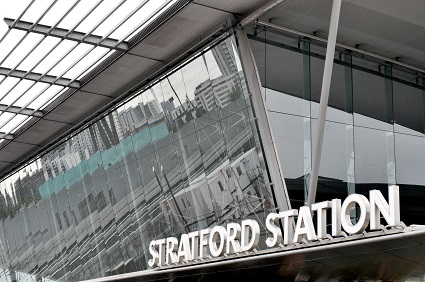
Stratford in East London continues to experience significant regeneration and expansion as a result of the 2012 Summer Olympics, which were centred around Queen Elizabeth Olympic Park. The district within the London Borough of Newham has seen a number of other projects bring new life to the area, including the multi-billion pound Westfield Stratford City shopping and commercial centre. The area’s relatively low rents are expected to continue to attract businesses from across sectors in the foreseeable future.

Stratford’s Economy

In recent years, Stratford has been the focal point for significant expansion and regeneration. High-profile projects have included the Queen Elizabeth Olympic Park, which includes a number of venues for the 2012 Olympic Games including the Olympic Stadium, the London Aquatics Centre, and the London Velopark. The Olympics also added approximately 3,500 new homes when the former Olympic Village was converted into the East Village development. Other projects on the Olympic Park site include 1,500 new homes as part of the East Wick and Sweetwater neighbourhoods, new facilities for University College London and the Victoria & Albert Museum, Loughborough University’s iCity tech campus, and 15 new office and residential buildings in the International Quarter. Developments close to Westfield Stratford City will also add some 5,000 new homes as well as office space, public spaces, schools and other facilities. Other redevelopment projects have included upgrades to Stratford Station and the new 150 High Street, Stratford residential tower. Continue reading “London Office Space 2015: Stratford”