The Most Haunted Places in London, England: Office Buildings Edition

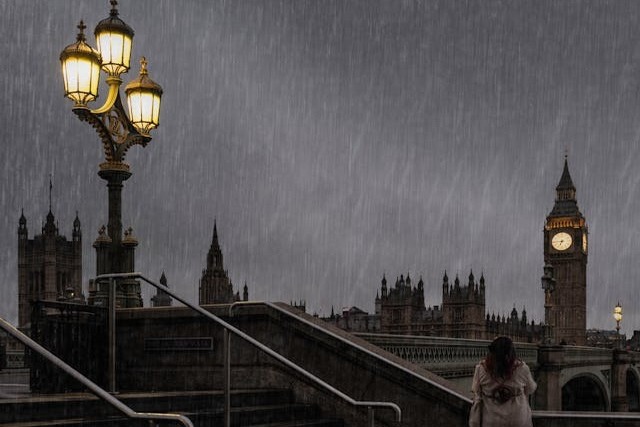
A nighttime view of a woman standing at the end of a bridge looking towards Big Ben and the Gothic spires of Westminster Hall and the House of Lords across the river. The sky is dappled grey and sheets of rain are pouring down. The primary light sources are Big Ben’s lit clock face and the antiquated light post with three lantern-like lights lit to the woman’s left. Image at LondonOfficeSpace.com.

London isn’t only a city steeped in history; many of its buildings are surrounded by an aura of mystery and dark forces. In fact, even some of the city’s modern office buildings are said to be haunted places. If you’re an employee working late in certain London offices, you might have more than your workload to worry about! Let’s take a look at some of London’s most haunted office buildings, where ghosts might also be coming to clock in.

1. Fenchurch Street – EC3

Offices in Fenchurch Street range from listed buildings to modern landmark towers that will surely impress clients and visitors. But some people might not realise that office buildings in Fenchurch Street are just half a mile away from the Tower of London, one of the city’s most infamous haunted spots. 

Continue reading “The Most Haunted Places in London, England: Office Buildings Edition”

Explore Fleet Street: History, Architecture, Business and Tourism

Explore Fleet Street London LondonOfficeSpace.com @officeinlondonFleet Street – The historic heart of Britain’s newspaper industry is Fleet Street. Given its past as a centre for publishing and printing, Fleet Street has become linked to some of Britain’s most notable literary personalities. A main thoroughfare throughout its history, Fleet Street is today connected with the rest of the city with nearby Underground stations, including Temple, Chancery Lane, and Blackfriars, as well as the City Thameslink and Blackfrairs railway stations.

Continue reading “Explore Fleet Street: History, Architecture, Business and Tourism”

Iconic London Landmarks

As one of the world’s most visited cities, London is not short of tourist attractions. Of course, different people visit the British capital for different reasons: shopping, business, and nights out are some of the most common. Whichever the reason that brings you to London, make sure you do not miss out on the city’s most iconic landmarks.

Big Ben

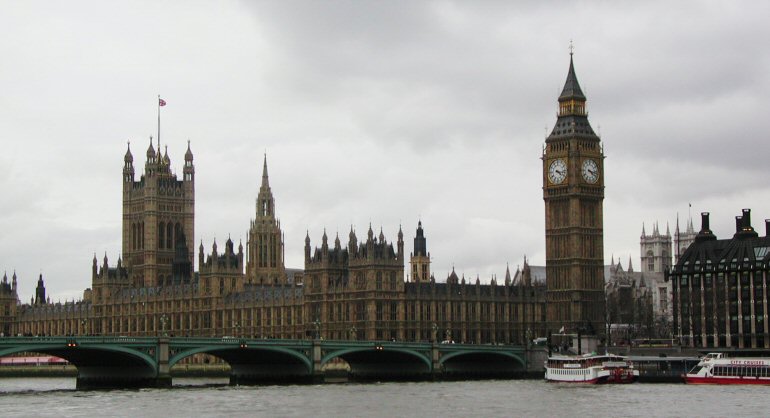
The Big Ben is the London landmark par excellence. This famous clock has been depicted in movies, stamps, postcards, printed on T-shirts, mugs, keyrings, and all sorts of souvenirs. Rather paradoxically, as famous as the Big Ben is, the origin of its name is unclear, as some believe that the clock tower was named after one of the engineers involved in its construction, while others think that the clock took its name from a boxing champion. Not many people know that the clock was actually designed by a lawyer who was only interested in clockmaking as a hobby.

The Big Ben has been punctually marking the hours with its characteristic chime since 1859, except for the war years and for some brief malfunctions. The clock sits at the top of the 315-feet tall Gothic tower known as the Elizabeth Tower, which is only open to UK residents who book their visit in advance (although if you are planning on doing this you must keep in mind that you will need to go up 334 steps in order to reach the top).

Buckingham Palace

Buckingham palace has been the official residence of British queens and kings since it was first built in 1705. The palace is one of the London landmarks that has taken longer to be completed, as this royal venue was not officially finished until 1962. The palace is built over the Tyburn river and on the site of a former medieval village, called Eye Cross. When the village was abandoned in the beginning of the 17th century, the site was turned into a mulberry garden. George III built the estate in 1761 (which contained Buckingham House, the oldest building in the palace complex), paying what today would be £3 million.

Buckingham Palace’s interior is as luxurious as one would expect from a royal residence, as it is decorated with antique tapestries, marble statues, and stunning period furniture. Parts of the palace are open to the public during the summer months.

Tower Bridge

Over its 119 years of existence, Tower Bridge has been the backdrop to countless photographs. This iconic suspension bridge over the River Thames is a Grade I listed construction and as such, part of the British heritage. The bridge was built to facilitate trade with the then up-and-coming East End of London, while allowing ships that navigated to river to continue its journey downstream towards the port of London.

Tower Bridge is open to pedestrian and motor traffic, and one of its walkways is home to an exhibition that tells the story of the bridge. The Bridge has been witness to several curious incidents, such as protests by Spiderman-clad demonstrators.

Covent Garden

Covent Garden has been a fruit and vegetable market since the 17th century. However, the area earned a reputation as a red light district a century later, and town planners were called in to come up with a solution. Covent Garden’s central building was constructed in 1830 in order to attract trade and to do away with any disreputable business. During the six years between 1974 and 1980, Covent Garden was not actually in Covent Garden, but in Battersea.

Today, Covent Garden is more than a fresh produce market, as it is home to the world’s largest Apple store and to some unique fashion, jewellery, and antiques boutiques. The area is also a prime eating and drinking spot.

The London Eye

In just thirteen years since its inauguration, the London Eye has positioned itself as the UK’s most visited paid tourist attraction, with more than 3.5 million visitors every year. At 443 feet, the Eye is the world’s third tallest wheel of its kind. The London Eye has 32 passenger cabins, which double as observation decks. This number is not random, as it represents each of the capital’s boroughs.

The wheel was built as part of the urban regeneration project that gave a facelift to London’s South Bank, although the London Eye is not London’s first Ferris wheel. The Great Wheel, which stood at Earl’s Court between 1895 and 1907, can be considered the prototype used in the design of the London Eye.

South Bank

As its name suggests, South Bank is the 2-mile long area immediately south of the River Thames. Despite its proximity to areas like Westminster and the City of London, the South Bank was always rather different, and it went from being an entertainment centre in the Middle Ages to becoming an industrial ground later on. However, developers realised the potential of this area as early as in the 1920s, although it was only towards the end of the 1980s that a walkway and a riverside park were built.

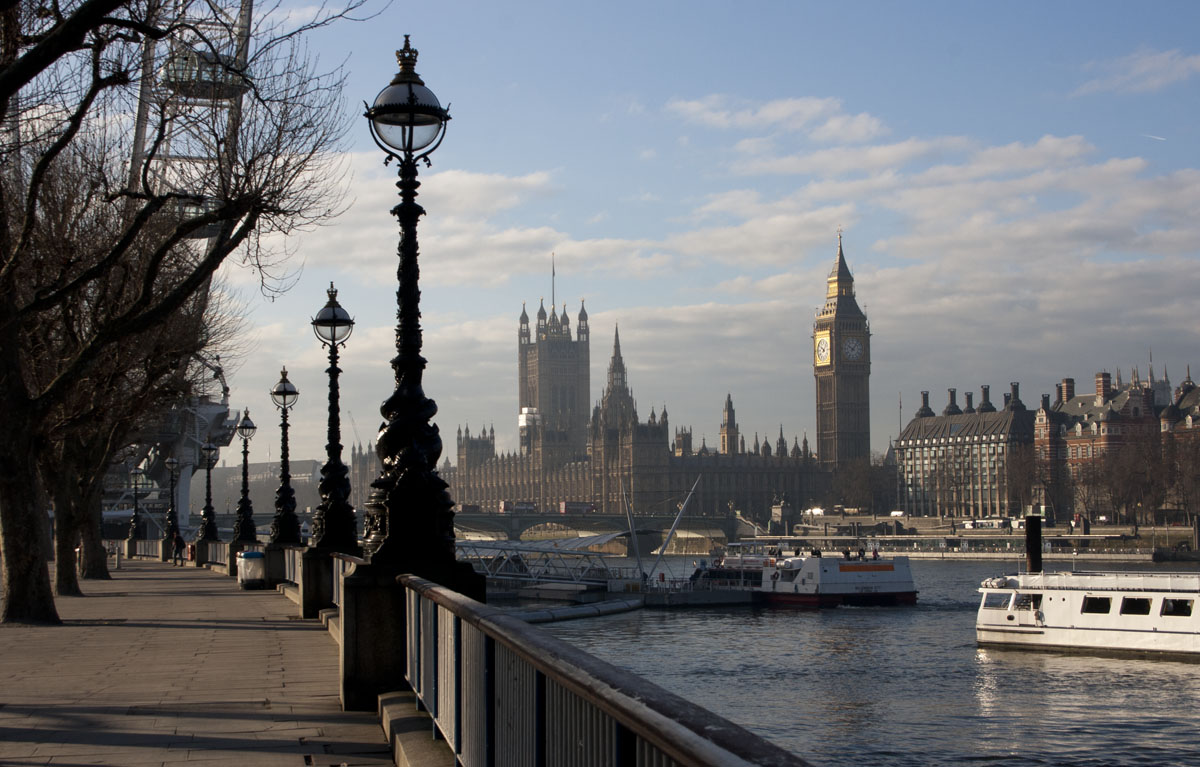
Nowadays, the South Bank is still being regenerated, but the area has already become London’s waterfront and a leading centre for cultural and creative activities, where visitors can enjoy theatres, street art, first-class accommodation options, and other London landmarks, like the London Eye or the Aquarium.

Read more about Key London Icons.

Key London Icons

Whether you have already been to London or not, it is likely that you are familiar with some of the most representative icons of the British capital. But just how much do you know about their history? Below you will find some interesting facts about London’s key icons.

London Underground LondonOfficeSpace.com @officeinlondon London Underground

Being 150 years old, the London underground (also known as the tube) is the world’s oldest transportation system of its kind. The underground was created in order to alleviate London’s road congestion, which was already notorious back in 1850. The first line to open was the Metropolitan line, which at the time only ran between Paddington and Farringdon Street.

Today, the underground serves 270 stations along 250 miles in London, Essex, Hertfordshire, and Buckinghamshire, and it is used by more than 3 million people every day. Perhaps the tube lacks the imposing interiors of other underground systems (like the Moscow underground), but it certainly has other attractions, such as deers, woodpeckers, grass snakes, and other forms of wildlife that have been known to live in the underground network.

Black London Cabs

Also known as Hackney carriages, the black London cab is one of the most iconic sights on the streets of the capital. The first Hackney carriages were horse-drawn and navigated the streets of London since 1662, although the first black London cab as we know it only appeared in 1901.

Much has changed since the days when London cabs were powered by horses. Today, there are even mobile applications that allow you to use your smartphone to hail, track, and pay for your black London cab ride. Continue reading “Key London Icons”

A Guide to London’s Mayfair

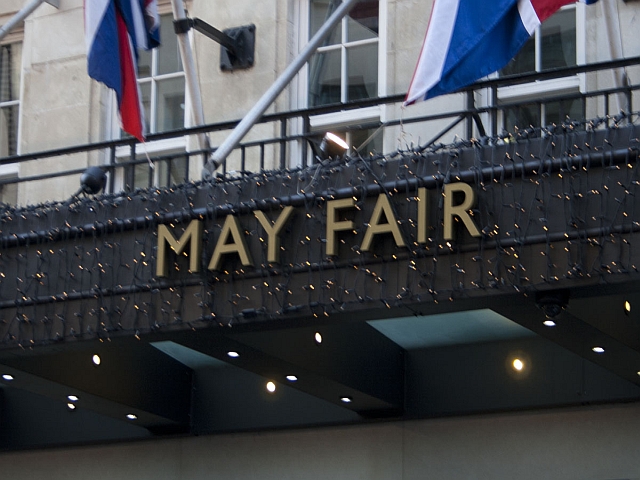
The neighbourhood of Mayfair is one of London’s most prestigious addresses. Embassies, five-star hotels, exclusive boutiques, and some of the capital’s most expensive real estate can all be found here. Over the years, the area has been home to some notable residents, like Alexander Graham Bell, Jimmy Hendrix, Oscar Wilde, and even Queen Elizabeth. If you are interested in finding out more about this area of London, this article provides a good introduction to the history of Mayfair and a guide to some of its most iconic landmarks.

Mayfair London @officeinlondon

Continue reading “A Guide to London’s Mayfair”

Explore Bond Street: History, Architecture, Business and Tourism

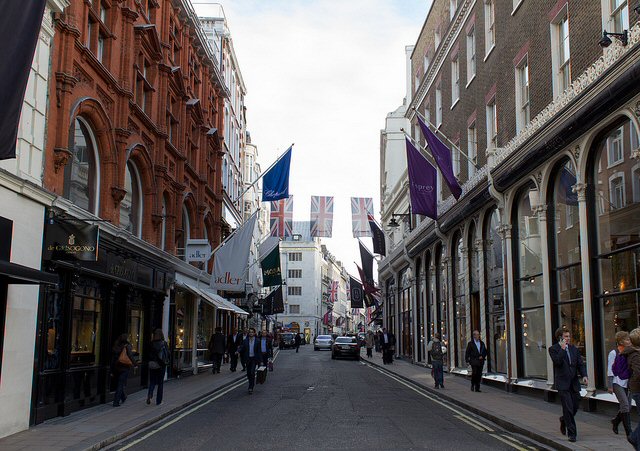
Bond Street was first laid out in 1680. At that time, only the section known as Old Bond Street existed. In 1720, the street layout was completed with a further section that is now New Bond Street. Nowadays, Old Bond Street runs between Burlington Gardens and Piccadilly, while New Bond Street is the northern section that connects with Oxford Street.

Bond Street LondonOfficeSpace.com @officeinlondon
(Image © M Hooper)

Bond Street was named after its developer, Sir Thomas Bond. In the late seventeenth century, the area that is now known as Old Bond Street was occupied by a mansion called Clarendon House. This was one of London’s most expensive properties at the time. Following Lord Clarendon’s death, the property was sold and demolished, giving way to what today is known as Old Bond Street.

For over one hundred years, Bond Street has been one of London’s most exclusive shopping destinations, particularly for those looking to buy antiques, art, or jewellery. The internationally renowned Sotheby’s auction house has been based in Bond Street since 1917, and the same can be said about the Fine Art Society, which has been at this London address since it was first inaugurated in 1876.

Information on commercial real estate prices in Bond Street

According to the Cushman & Wakefield Main Streets Across the World report for 2011, Bond Street commercial real estate prices were the sixth highest in the world, only preceded by the Champs Elysées, Tokyo’s Ginza Avenue, Hong Kong’s Causeway Bay, and New York’s Fifth Avenue. At the time of the survey, retail premises were being priced at £577 per square feet. At European level, Bond Street is the continent’s second most expensive street. Continue reading “Explore Bond Street: History, Architecture, Business and Tourism”

Weird Place Names in London

Today, London is a dynamic global city and a cultural confluence, providing its lucky inhabitants with an exciting medley of places to see and things to do. With a history that stretches back well over 2,000 years, it is one of ye oldest cities on earth, and it has a varied and intriguing history spanning the reign of tyrannous kings, civil wars, the plague, and a constant cultural flux. All cities with such a history will sport plenty of peculiar place names that in today’s context might seem ridiculous, silly, or completely inappropriate. This article goes over some of the weirdest, funniest, and most inspiring place names that London has to offer.

The why behind the weird and the wonderful

In the London area, place names are usually named after landmarks and historical buildings, the trades and occupations that took place in a given area, the people who were vain enough to permanently imprint their contribution to the city, or after common London events, fairs and occasions. Continue reading “Weird Place Names in London”

Historic Tours of London

London is a busy and vibrant city with a colourful history.Whether you are interested in learning about the gruesome side of Victorian London or the history of the monarchy, or perhaps you just want an activity to encourage team building within a fun and relaxed atmosphere, there are many historic tours available that will appeal to people with different interests.

The Tower of London

The Yeoman warder tour (or beefeater as they are commonly known) is an entertaining and insightful tour of the Tower of London. A Yeoman warder will guide you through the history of the palace and the monarchy and provide information on the palace’s architecture, as well as grisly tales of the torturing of Guy Fawkes and the lives and deaths of Henry VIII and his wives. Continue reading “Historic Tours of London”